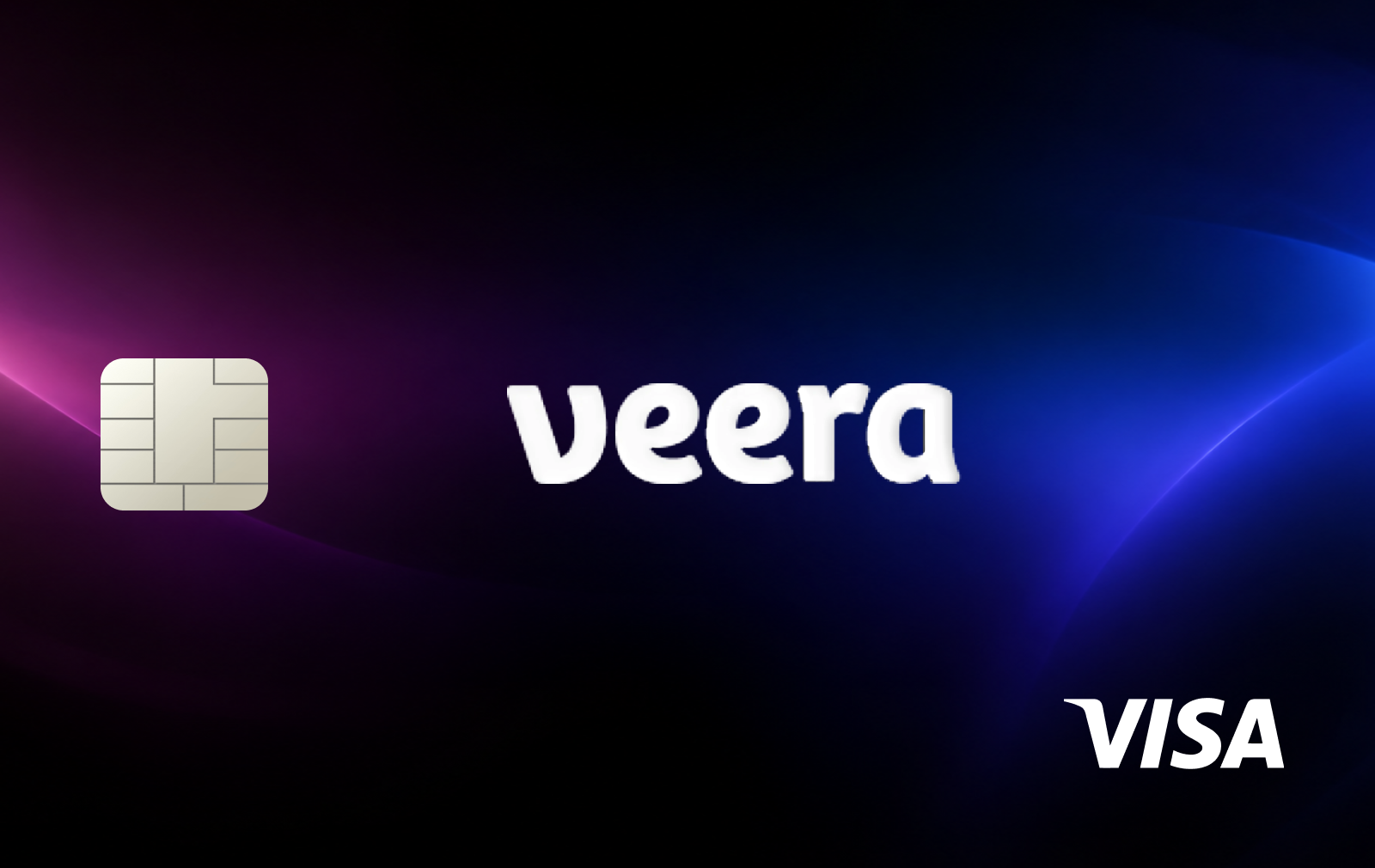
Veera Card

Veera Card is an on-chain payment card built around Veera's self-custodial wallet, designed to spend user-controlled assets without first moving them into a centralized exchange account.

General

Brand / program
Veera Card
Card type
Virtual, Physical And Credit
Wallet
Non-custodial
Payment network
Available regions
Global
Supported blockchains
Not

Fees & rewards

Welcome bonus
None
Registration fee
No Info
Requirement
Not disclosed
Cashback
No Info
FX fee
No Info
APR / Yield
Yes

Access & limits

Need KYC
Yes
Mobile pay
Yes
Bank transfer
No
ATM withdrawal limit
No Info
Daily spending limit
No Info

Pros

Why Veera Card can be a great choice.

  • Self-custodial underlying wallet
  • Spending from user-controlled on-chain balances
  • 0% advertised forex fee
  • Gasless card transactions
  • Cashback is part of the card product
  • Passkey-based wallet security
  • No centralized exchange balance required

Cons

Things to consider before applying.

  • Full card fee schedule is not public
  • Payment network is not officially disclosed
  • Card issuer is not publicly disclosed
  • Spending limits are not published
  • ATM terms are not publicly documented
  • Exact card availability by country is unclear
  • Fixed cashback rate has not been published

About Veera Card

Veera Card is the spending product of Veera, an on-chain financial app built around a self-custodial, passkey-based wallet.

Veera's core architecture keeps wallet keys on the user's device. The company says card payments are designed to be authorized against user-controlled on-chain balances rather than requiring assets to be transferred into a centralized custodial account before spending.

Spending and fees

Veera currently advertises 0% forex fees and gasless card transactions.

The company also promotes cashback and yield on unused balances, but it does not currently publish a fixed cashback percentage, reward cap or complete public card fee schedule.

Card issuance fees, ATM pricing and transaction limits have not been publicly documented in sufficient detail.

Custody

Veera Wallet is explicitly self-custodial. Keys are protected on the user's device using passkeys and hardware-backed security, and every transaction requires user authorization.

Veera separately states that its card architecture is designed to support spending without transferring custody of funds to centralized accounts.

Current status

Veera actively promotes the card on its website and reports more than 30,000 card sign-ups.

However, the company does not currently publish a complete public cardholder agreement covering the card issuer, payment network, card formats, issuance regions or detailed limits.

For that reason, these fields should remain unconfirmed rather than inferred from third-party card directories.

How to get the Veera Card

  1. Download Veera and create a self-custodial wallet.

  2. Open the card section or use the official Claim your Card option.

  3. Complete the card onboarding requirements presented to your account.

  4. Review the applicable fees, limits and regional terms before activation.

  5. Activate the card once access is offered.

Ratings and comments

Comments are shown in their original language across every locale.

Leave a review

Reviews are published after moderation.

Your rating

No comments yet

Be the first to share a useful experience with this card.

Frequently asked questions

Quick answers to common questions about Veera Card.

Still have a question?
Is the Veera Card non-custodial?

Veera describes both its wallet and card architecture as self-custodial. Card spending is designed to use user-controlled on-chain balances without requiring the assets to be deposited into a centralized custodial account first.

What are the Veera Card fees?

Veera currently advertises 0% forex fees and gasless card transactions. A complete public schedule covering issuance, ATM and other card-level fees has not yet been published.

Is the Veera Card available now?

Veera actively promotes the card and reports more than 30,000 card sign-ups. However, detailed public issuance terms and a clear country-by-country availability list are not currently published, so broad general availability should not be assumed.